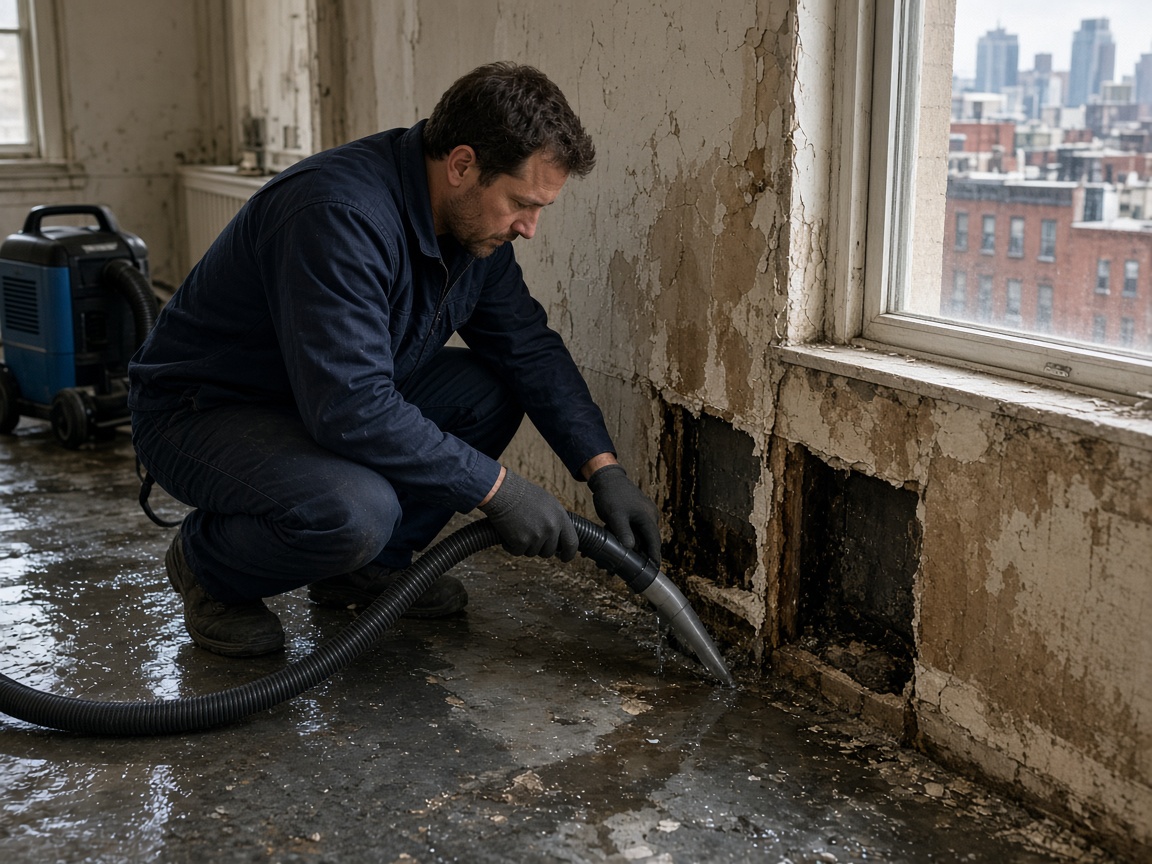
Jersey City row homes built before 1940 in Paulus Hook Historic District and Bergen-Lafayette often have plaster walls over lath and narrow crawl spaces that trap water after roof leaks or burst pipes. Cold winter temperatures cause supply lines to freeze and split, especially in unheated basements near Van Vorst Park. Technicians must open walls carefully to avoid damaging original woodwork while pulling moisture from brick foundations that sit close to the water table.
Humid summers combined with proximity to the Hudson River increase mold risk inside homes in Liberty Harbor and Exchange Place after even minor flooding. Extraction equipment must run longer in these tight lots because airflow is limited between attached buildings. Crews also watch for hidden saturation in Newport high-rises where HVAC condensate lines leak into shared walls and travel between floors.
Properties in Greenville and The Heights sit on steeper grades that send stormwater toward foundations during heavy rain. Older cast-iron drains under these streets clog with debris, backing water into finished basements. Repair work here includes checking sewer lines before drying begins so moisture does not return through floor drains once equipment is removed.
Technician insight
In Jersey City the thing that catches most people out with Water Damage Repair is how quickly water travels between attached row homes in The Heights and Greenville. A leak in one basement can saturate the neighbor’s foundation before anyone notices because the lots are narrow and the soil stays damp year-round.
Burst Pipe in Journal Square Row Home
A supply line froze and split in a 1920s home near Journal Square, sending water into the finished basement and up one interior wall. Crews extracted water, opened the plaster carefully to reach wet lath, and ran drying equipment for four days. Moisture readings stayed below 12 percent before walls were closed and floors refinished.
Water Damage Repair Services We Offer
✓Basement Water Extraction
Removes standing water from below-grade spaces common in Journal Square and Greenville row homes before mold sets in.
✓Ceiling and Wall Drying
Targets hidden moisture in plaster and lath after roof or pipe leaks in Paulus Hook and Van Vorst Park homes.
✓Historic Home Water Damage Repair
Restores original materials in Paulus Hook Historic District and Bergen-Lafayette without destroying period details.
✓Post-Flood Structural Drying
Uses industrial air movers and dehumidifiers on Hudson River floodwater in Liberty Harbor and Exchange Place buildings.
✓Pipe Burst Restoration
Repairs damage from frozen lines that split during cold snaps in unheated The Heights and Newport basements.
Water Damage Repair Cost in Jersey City, NJ
| Service | Typical Range | What Affects It |
|---|---|---|
| Initial Assessment | $150–$300 | Size of home and number of rooms affected |
| Water Extraction | $400–$900 | Depth of water and whether sewage is involved |
| Drying Equipment Rental | $600–$1,400 | Days required and square footage |
| Plaster Wall Repair | $800–$2,200 | Historic finishes versus standard drywall |
Ranges are typical for Jersey City, NJ and confirmed with an exact written quote before any work starts.
How it works
- 1
On-Site Assessment
Technician inspects affected rooms, checks moisture levels in walls and floors, and notes construction type typical of the neighborhood.
- 2
Water Removal
Pumps and vacuums extract standing water from basements and crawl spaces while protecting original wood and plaster.
- 3
Drying And Monitoring
Equipment runs for several days with daily moisture readings to confirm drywall, joists and insulation reach safe levels.
- 4
Final Restoration
Replace damaged materials, seal surfaces and return the space to pre-loss condition with minimal disruption to daily life.
Pricing
Most Jersey City water damage repair jobs fall into mid-range pricing because older housing stock requires extra care with plaster and tight access.