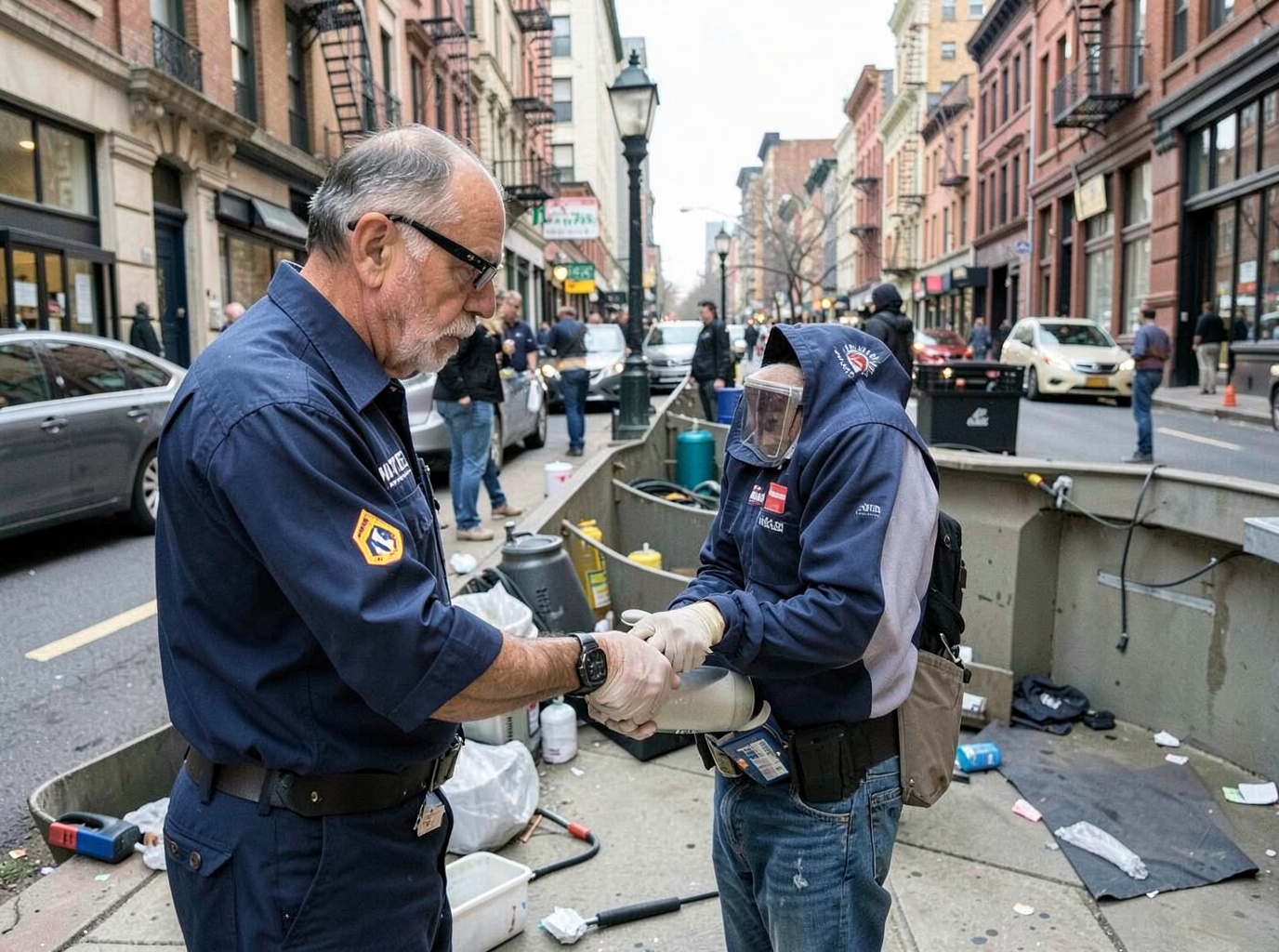
Ashland sits just west of Journal Square with rows of early 1900s brick and frame homes packed onto narrow lots. Heavy summer rains and winter freeze-thaw cycles regularly send water into basements along Ashland Avenue and nearby side streets. Our crews reach these addresses quickly from our base on 14th Street, bringing portable extractors sized for the tight alleys that larger trucks cannot enter.
Many Ashland properties back up to the slope toward Lincoln Park, so runoff funnels straight into rear foundations during Hudson County storms. Shared walls in the older two- and three-family houses let moisture travel between units, turning a single roof leak into multi-unit damage. We map moisture with thermal cameras before cutting drywall so repairs stay limited to the affected sections.
Hudson County winters drop below freezing for weeks, bursting pipes in unheated cellars common on the Bergen-Lafayette edge of Ashland. Summer humidity then feeds mold on the remaining plaster and joists. Our drying plans account for both the cold-weather pipe risk and the high-moisture air that lingers after extraction.
Around Ashland
We regularly work near:
- 📍Journal Square
- 📍Lincoln Park
- 📍Ashland Avenue
- 📍Bergen Avenue
- 📍Communipaw Avenue
Water Damage Restoration in Ashland — Local Notes
- •Pre-war row homes on narrow Ashland lots leave little room for large equipment, so we stage smaller dehumidifiers and air movers through basement windows.
- •Flat roofs and parapet walls on Bergen Avenue buildings trap standing water that seeps into top-floor ceilings during the area's humid summers.
- •Runoff from the slight grade near Lincoln Park pools against rear foundations, requiring French-drain checks before final drying in those blocks.
- •Shared party walls in multi-family houses along Communipaw Avenue let water migrate sideways, so we test adjacent units even when only one reports a leak.