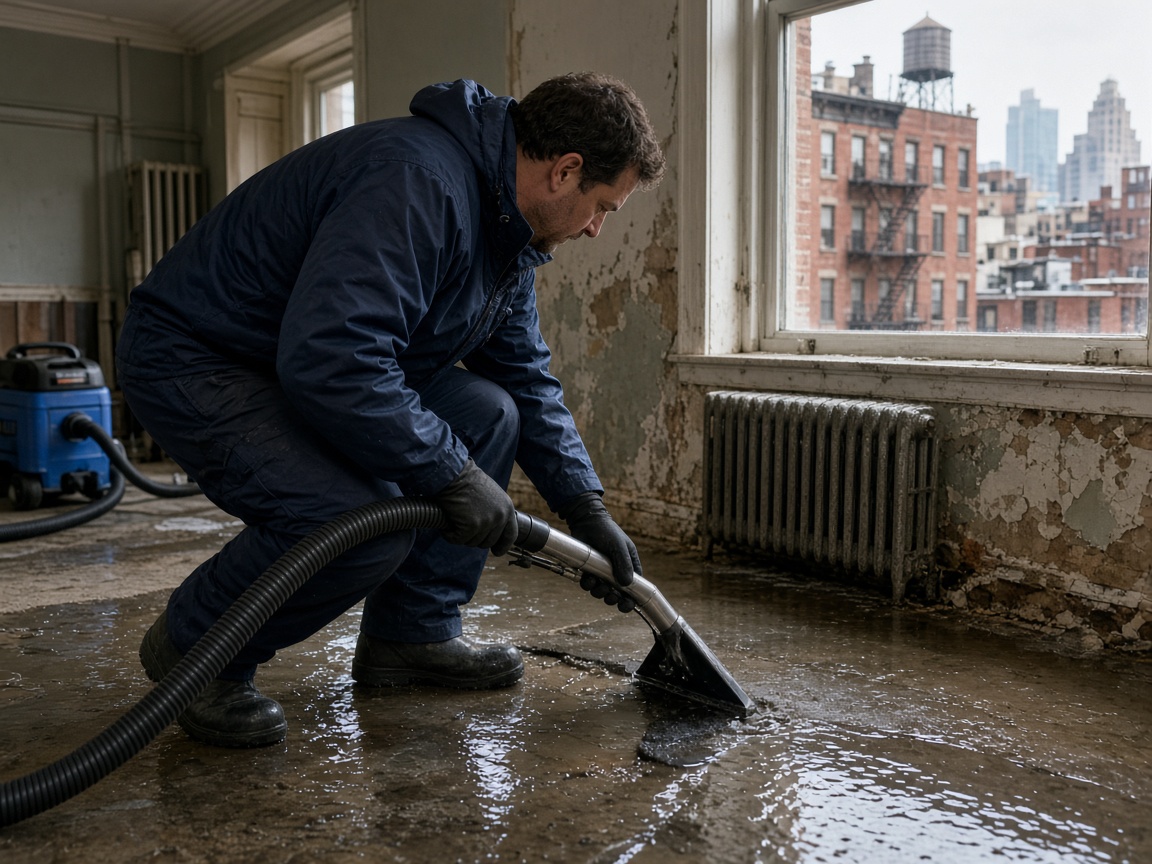
Syracuse sits in the heart of Jersey City with its mix of older row houses and multi-family buildings that line the blocks around 14th Street. When pipes burst or roofs leak during heavy summer storms, water travels quickly through shared walls and into basements that sit close to the water table. Our crew at 166 14th St responds directly to these calls, extracting water before it reaches neighboring units in the tight lots typical of this neighborhood.
Winter freezes bring another set of problems. Cold snaps cause supply lines to split in unheated Syracuse cellars, sending water across concrete floors and up into first-floor joists. We use moisture meters on site to find hidden saturation in lath-and-plaster walls that are common in these pre-war homes, then set drying equipment without tearing out more material than needed.
Hudson County humidity keeps materials damp longer than in inland towns, so we run dehumidifiers longer and check readings daily until levels match the dry standard for the structure. Homeowners in Syracuse call us because we know the exact access points behind the narrow driveways and the drainage patterns that send street water toward certain foundations after nor'easters.
Around Syracuse
We regularly work near:
- 📍Journal Square
- 📍Paulus Hook Historic District
- 📍Newport Centre
Water Damage Restoration in Syracuse — Local Notes
- •Syracuse row homes from the early 1900s often have fieldstone foundations that wick moisture from the soil after heavy rains.
- •Narrow lots limit equipment placement, so we stage dehumidifiers and air movers through side alleys rather than front yards.
- •Proximity to the river and combined sewer system means storm water can back up into lower-level units during high tide events.
- •Cold winters freeze exposed pipes in uninsulated Syracuse basements more often than in newer Hoboken developments.