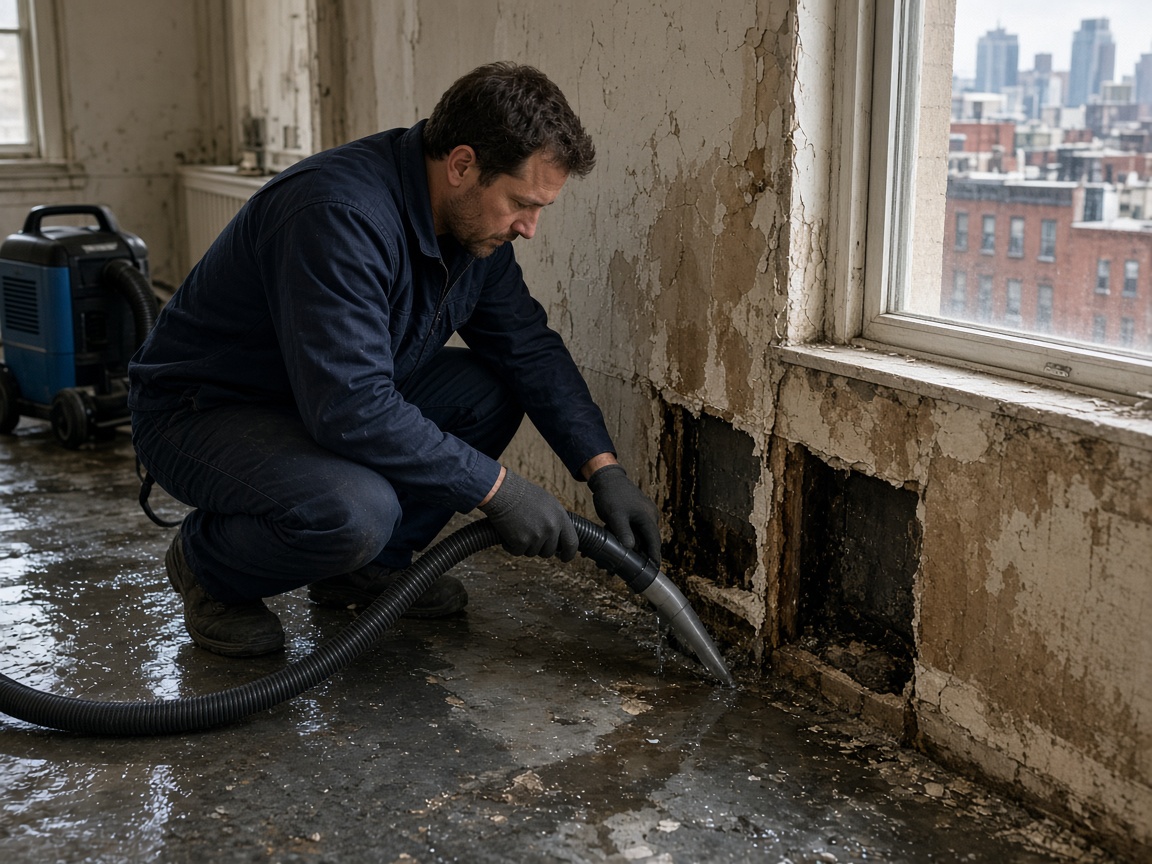
Valparaiso sits in the Bergen-Lafayette section of Jersey City with rows of early 1900s two- and three-family homes on tight lots along Valparaiso Street and nearby Communipaw Avenue. These older brick and frame buildings often have stone foundations and finished basements that take on water quickly during summer storms or when winter pipes freeze and burst. Our crew at 166 14th St responds directly to calls from this pocket, bringing portable extractors that fit through the narrow side alleys common here.
Hudson County winters and humid summers both create repeat problems for Valparaiso properties. Cold snaps send water lines through uninsulated crawl spaces, while heavy rain overwhelms the combined sewer lines that back up into lower levels near the Lincoln Park edge. We focus on drying the actual joists and subfloors in these tight spaces rather than just surface water so the job holds up when the next cold front moves through.
Access from the business location on 14th Street lets us reach Valparaiso addresses in under fifteen minutes most days, avoiding the usual Journal Square traffic backups. We handle everything from small ceiling leaks in the upper units to full basement floods caused by the area’s sloping grades toward the park.
Around Valparaiso
We regularly work near:
- 📍Valparaiso Street
- 📍Lincoln Park
- 📍Communipaw Avenue
- 📍Bergen Avenue
- 📍PS 11 Martin Luther King Jr. School
Water Damage Restoration in Valparaiso — Local Notes
- •Narrow side yards on Valparaiso Street limit equipment size so we use smaller drying units that still reach behind lath-and-plaster walls typical in these 1920s homes.
- •Many basements sit below the grade of Communipaw Avenue, so we install temporary French drains during extraction when the combined sewers surcharge after heavy rain.
- •Winter pipe bursts are common in unheated rear additions; we prioritize thermal imaging on these additions first because the brick party walls hide moisture that travels into adjacent units.
- •Lincoln Park’s tree canopy drops heavy leaf loads into local catch basins each fall, slowing street drainage and pushing more water toward the lower Valparaiso blocks.