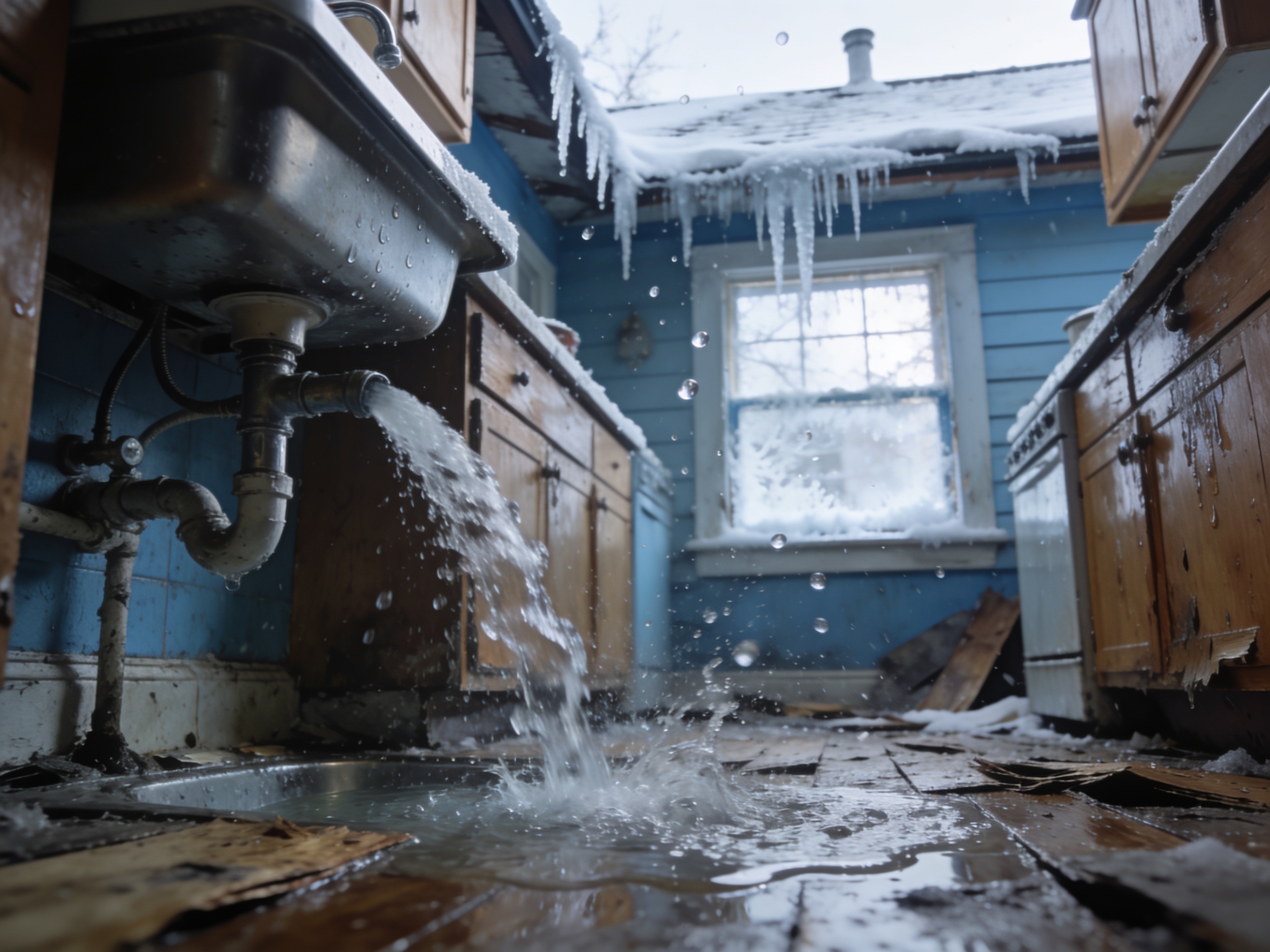
Waverly sits between Journal Square and the southern edge of The Heights, a pocket of older brick row houses and two-family homes built mostly before 1940. Narrow lots and shared walls mean water from a burst pipe or roof leak often travels into neighboring units before anyone notices. Our crews know the back alleys off Bergen Avenue and the tight driveways along Summit Avenue, so we can stage equipment without blocking the one-way streets that fill up fast during rush hour.
Hudson County winters bring sudden freezes that crack galvanized lines in these uninsulated basements. Summers add humidity that turns small leaks into mold on lath-and-plaster walls. We map the storm drains along Pavonia Avenue and the low spots near Lincoln Park so we can predict where runoff pools after heavy rain. Every job starts with checking the grade of the sidewalk and the condition of the cast-iron sewer laterals that run under the front stoops.
Because we keep trucks at 166 14th Street, we reach Waverly in under fifteen minutes most weekdays. That matters when a second-floor bathroom leak is dripping through the ceiling of the apartment below before 8 a.m.
Around Waverly
We regularly work near:
- 📍Lincoln Park
- 📍Bergen Avenue
- 📍Summit Avenue
- 📍Pavonia Avenue
- 📍Journal Square
Water Damage Restoration in Waverly — Local Notes
- •Pre-war brick row homes on narrow lots limit equipment access; we often work through rear yards or basement windows.
- •Older galvanized and cast-iron pipes in unheated basements fail during January freezes along streets like Summit Avenue.
- •Runoff from Journal Square slopes collects at low points near Lincoln Park, pushing water into foundation walls after storms.
- •Shared walls mean water migrates sideways; we check adjoining properties on Bergen Avenue before drying stops.